
Every business owner signs contracts. But not everyone understands them well. Many people see contracts as just paperwork. In reality, contracts protect your company, your money, and your reputation. If you run a business, it’s vital to know the basics of contracts—and a few advanced points most beginners miss.
This guide explains what every business owner should know about contracts. It will help you avoid costly mistakes, make smarter decisions, and build stronger business relationships.
What Is A Contract?
A contract is a legal agreement between two or more parties. It can be written or spoken, but written contracts are safer and easier to enforce. Each party promises to do something, like deliver goods, pay money, or provide a service.
To be valid, a contract must include:
- Offer: One party proposes something.
- Acceptance: The other party agrees.
- Consideration: Each side gives something of value.
- Intention: Both want a legally binding deal.
- Capacity: All parties are legally able to make the agreement.
If any of these parts are missing, the contract might not be enforceable.
Why Contracts Matter In Business
Contracts are more than just legal documents. They:
- Protect your interests: If something goes wrong, you have proof of what was agreed.
- Reduce misunderstandings: Everything is clear in writing.
- Build trust: Partners see you as professional and reliable.
- Help resolve disputes: Courts can use contracts to decide who is right.
About 70% of small business lawsuits involve contract issues. Missing or unclear contracts can cost you time, money, and even your business.
Types Of Contracts Every Business Owner Should Know
There are many kinds of contracts in business. Here are the most common:
| Contract Type | Main Use | Example |
|---|---|---|
| Sales Agreement | Buying or selling goods/services | Buying office equipment |
| Service Contract | Hiring someone for a job | Cleaning services |
| Employment Contract | Hiring staff | Onboarding new employees |
| Lease Agreement | Renting property | Office space lease |
| Non-Disclosure Agreement (NDA) | Protecting confidential info | Sharing business plans |
Each type serves a different purpose. Choosing the right contract is key to protecting your business.
Key Elements To Include In Business Contracts
Missing details can cause big problems. Every contract should include these key points:
- Names and addresses of all parties
- Description of goods/services
- Price and payment terms
- Delivery deadlines
- Duration of agreement
- Termination conditions
- Dispute resolution process
- Signatures of all parties
Here’s an example of how these elements can look in a service contract:
| Section | Example Details |
|---|---|
| Payment Terms | $1,000 paid within 30 days |
| Service Description | Website design for 5 pages |
| Deadline | Work completed by July 15 |
| Termination | Either party can end with 14 days’ notice |
Including these details prevents confusion and protects both sides.
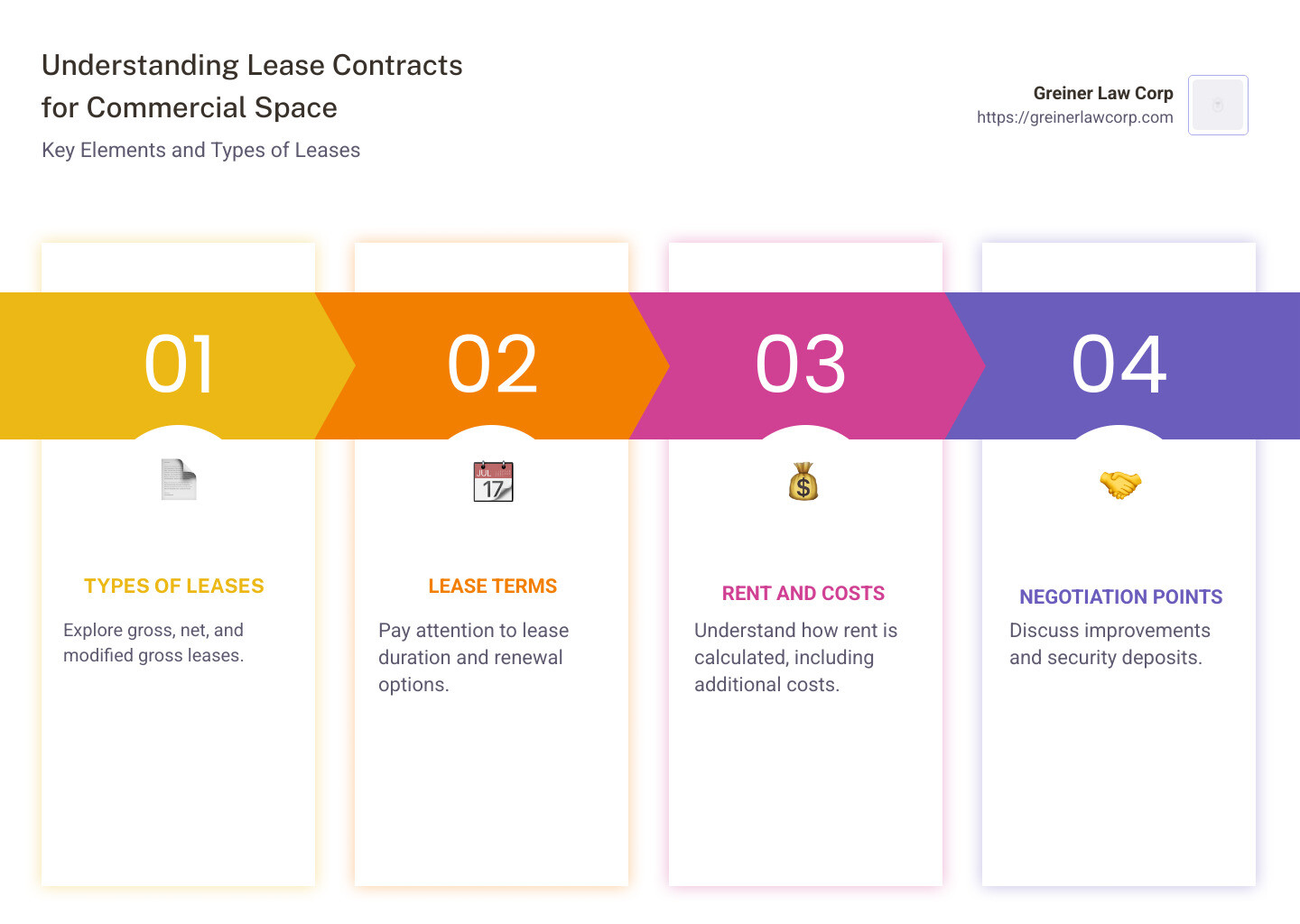
Credit: greinerlawcorp.com
Common Contract Mistakes Business Owners Make
Even experienced business owners make errors. Here are mistakes to avoid:
- Using unclear language: Simple, direct wording is best. Avoid legal jargon.
- Leaving out payment terms: Always state how and when payments happen.
- Missing deadlines: Set clear dates for delivery or completion.
- Not reviewing contracts: Always read every word before signing.
- Ignoring local laws: Some contracts must follow state or local rules.
A non-obvious mistake: Many businesses forget to update contracts as their company grows. For example, if you change your pricing or add new services, your old contracts may no longer match your business. This can lead to disputes or lost revenue.
How To Negotiate Contracts Successfully
Negotiation is part of every contract process. Good negotiation helps you get better terms and avoid risks. Here’s how to negotiate like a pro:
- Know your goals: Decide what matters most (price, deadlines, quality).
- Understand the other side: What do they want? What are their limits?
- Ask for changes: Don’t be afraid to suggest edits.
- Stay calm: Don’t rush or get emotional.
- Write everything down: Record any changes or promises.
A tip most beginners miss: When negotiating, always ask about what happens if things go wrong. For example, who pays if a delivery is late? Many people forget this, but it’s often where problems start.
Digital Contracts And E-signatures
Today, most contracts are signed electronically. Digital contracts and e-signatures are legal in the US and many other countries. They are fast, easy to store, and reduce paperwork.
Some benefits of digital contracts:
- Save time: No printing or mailing
- Easy tracking: You can see who signed and when
- Safe storage: Keep contracts in secure online folders
However, always use trusted platforms for e-signatures. Some free tools are not secure. For more details on digital contracts, you can visit Nolo.
When To Get Legal Help
Not every contract needs a lawyer. But in certain cases, legal advice is crucial:
- Large deals: Big contracts with lots of money involved
- Complex agreements: Partnerships, mergers, or licensing
- International contracts: Different laws may apply
- Disputes: If someone breaks a contract
Hiring a lawyer may cost money upfront, but it can save you thousands later. If you’re unsure, ask for a quick review before signing.

Credit: greinerlawcorp.com
How To Store And Manage Contracts
Losing contracts is a common—and expensive—mistake. A lost contract means you can’t prove what was agreed. Here are practical ways to manage contracts:
- Use secure cloud storage: Services like Google Drive or Dropbox protect files.
- Create a contract log: Keep a spreadsheet with contract dates, renewal times, and parties.
- Set reminders: Mark renewal dates and deadlines on your calendar.
- Back up files: Always keep a backup in case of computer failure.
A useful tip: If you work with many contracts, try contract management software. Some tools can track changes, send reminders, and even alert you to risks.
| Storage Method | Security Level | Best For |
|---|---|---|
| Paper Filing | Low | Small businesses |
| Cloud Storage | High | Medium to large businesses |
| Contract Software | Very High | Businesses with many contracts |
What To Do If A Contract Is Broken
If someone breaks a contract (called a breach), you have options:
- Talk first: Try to resolve the issue with the other party.
- Check your contract: Look for clauses about disputes or penalties.
- Send a formal notice: Write a letter explaining the breach.
- Consider mediation: A neutral third party can help.
- Go to court: If needed, you can sue for damages.
Most cases settle before court. But knowing your contract rights gives you leverage.

Credit: greinerlawcorp.com
Practical Insights Most Beginners Miss
Many guides talk about contract basics, but they skip two important points:
- Contracts change over time: Your business grows, laws shift, and partners change. Review contracts yearly to make sure they fit your needs.
- Verbal contracts are risky: They can be legal, but hard to prove. Always get agreements in writing, especially for important deals.
Another advanced tip: Even small changes to a contract (like changing a date or price) should be in writing and signed by all parties. This avoids confusion and protects you if things go wrong.
Frequently Asked Questions
What Happens If I Sign A Contract I Don’t Understand?
If you sign, you are usually bound by the contract—even if you didn’t understand it. Always read carefully and ask questions before signing.
Are Verbal Contracts Legally Binding?
They can be, but are hard to prove. Written contracts are safer and easier to enforce.
Can I Use Online Templates For Contracts?
Yes, but be careful. Templates are a good starting point, but they may not fit your situation. Always review and adjust for your needs.
What If The Other Party Refuses To Sign?
Without signatures, a contract is usually not valid. Try to understand their concerns, negotiate, or seek legal advice.
How Long Should I Keep Old Contracts?
Keep contracts at least 7 years. Tax laws and disputes can arise long after a deal ends. Digital storage makes this easier.
Business contracts are not just paperwork—they are the foundation of trust and success. Understanding contracts helps you protect your company, avoid costly errors, and build strong partnerships. Whether you’re just starting out or running a growing business, taking contracts seriously gives you an advantage.
If you invest time in learning and managing contracts, you’ll make smarter decisions and sleep better at night.
Read More:
- How Legal Services Simplify Business Compliance for Success
- When Should You Hire a Legal Service Provider? Expert Insights
- The Benefits of Hiring Experienced Legal Professionals: Expert Guidance
- How Online Legal Services Are Changing the Industry: A Revolution
- Understanding Your Rights With Professional Legal Support: A Guide
- The Role of Legal Services in Real Estate Transactions: Essential Guide
- Criminal Defense Legal Services Explained: Your Essential Guide
- Legal Services for Divorce: Essential Steps and Expert Tips